
English
Inquire
.avif)
Wind turbine structures operate under continuous cyclic loading for decades.
Tower sections, flanges and structural components are exposed to constant stress, outdoor conditions and limited service accessibility.
In this environment, weld preparation directly determines the long-term reliability of the entire turbine.
A turbine tower will undergo millions of load cycles over its lifetime.
Fatigue in welded joints starts where bevel geometry or surface quality was not optimal.Manufacturers must deliver components that meet strict standards — not only at the moment of installation, but throughout 20+ years of operation.

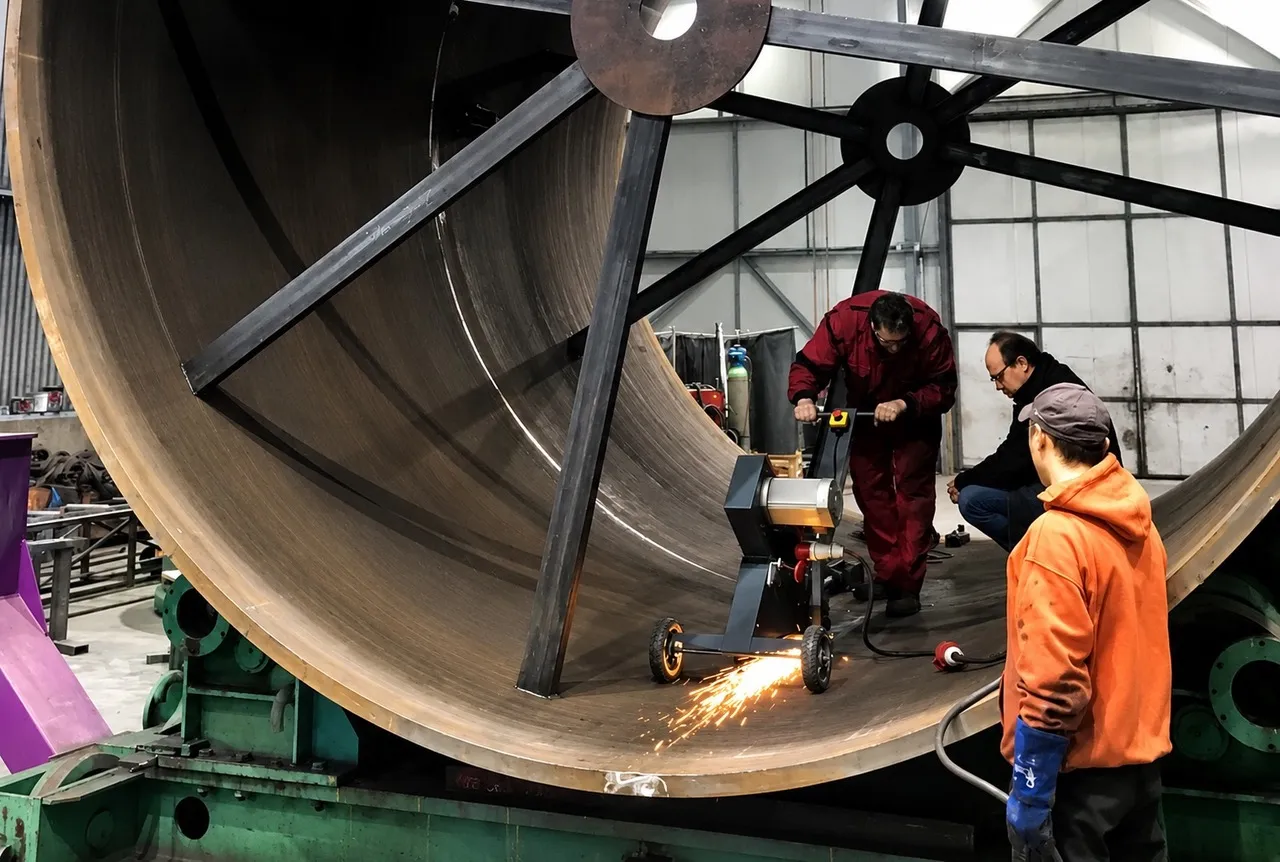
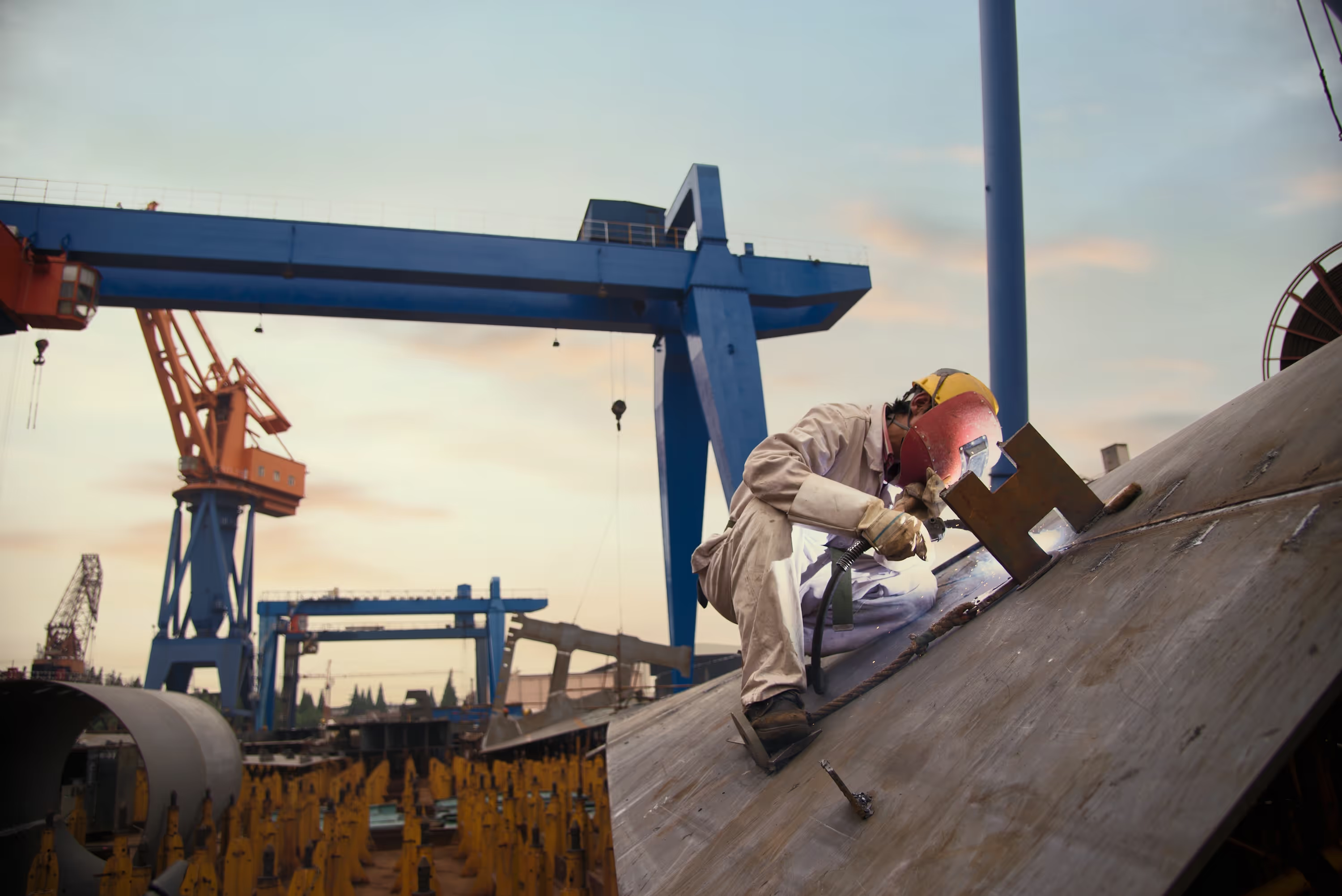
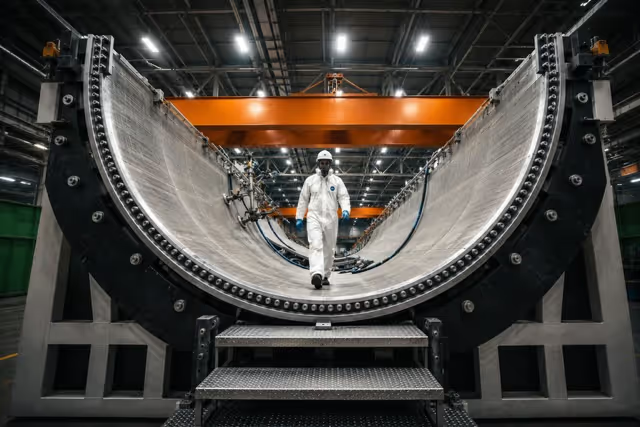
Wind turbine towers are typically manufactured from steel plates with thicknesses of 20–80 mm, welded into cylindrical or conical sections.
These structures are subject to:
Even small imperfections in weld preparation can become initiation points for fatigue cracks.
Standards such as EN 1090-3 or ISO 5817 (quality level B) define strict requirements for weld quality and inspection.
In many cases, 100% NDT testing is required.
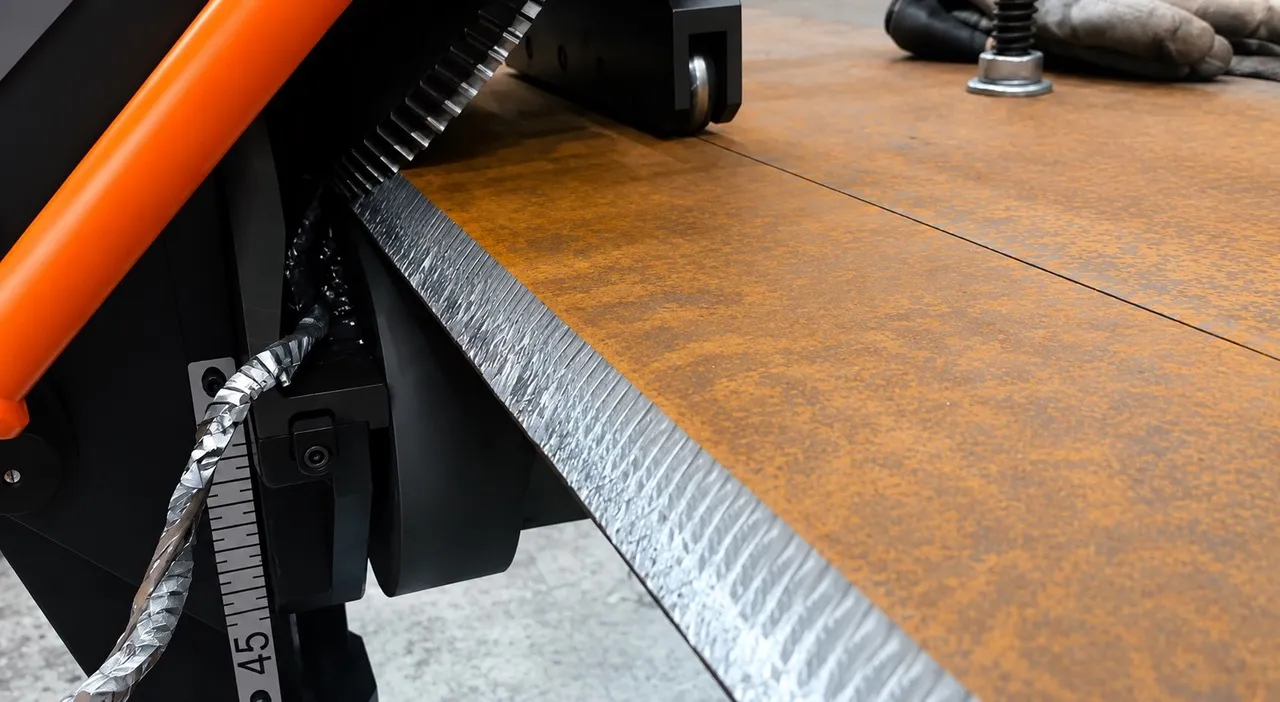
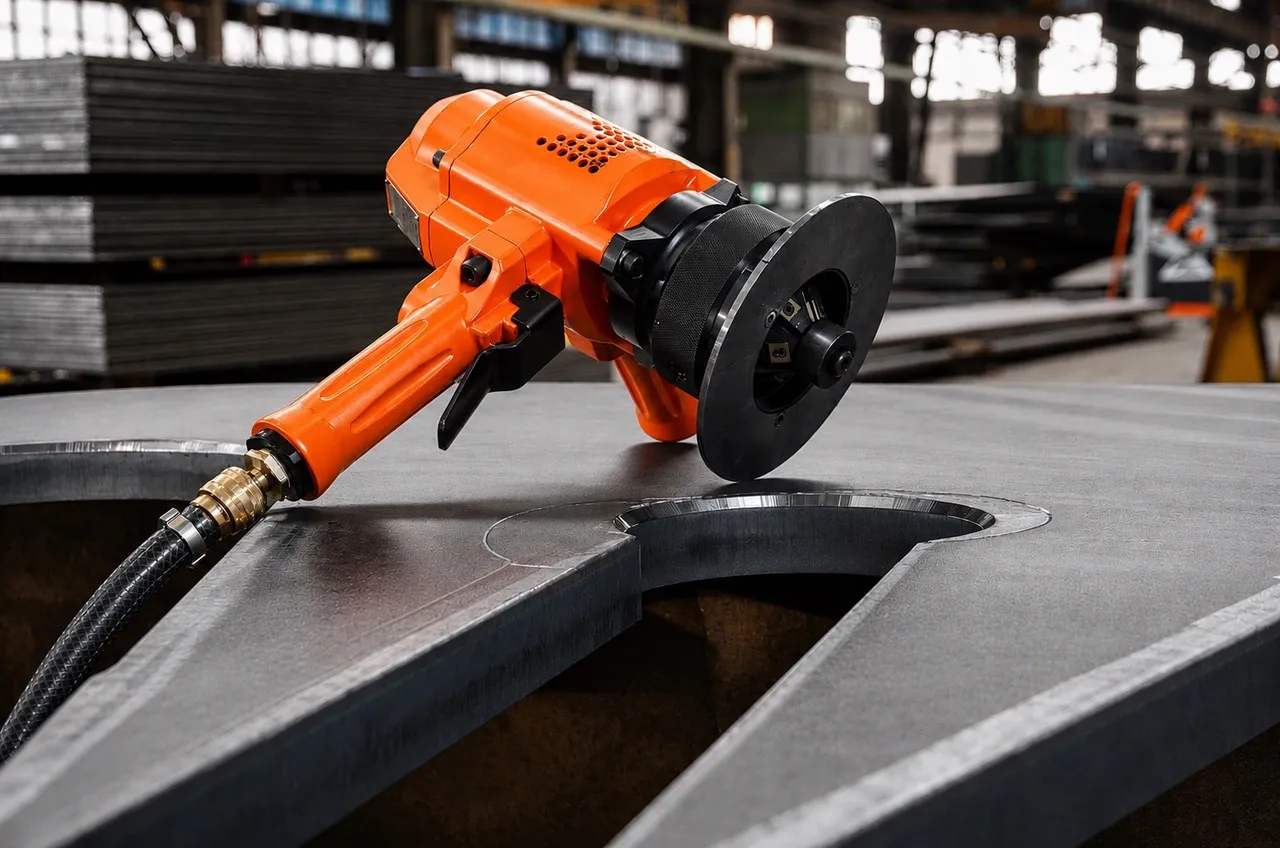
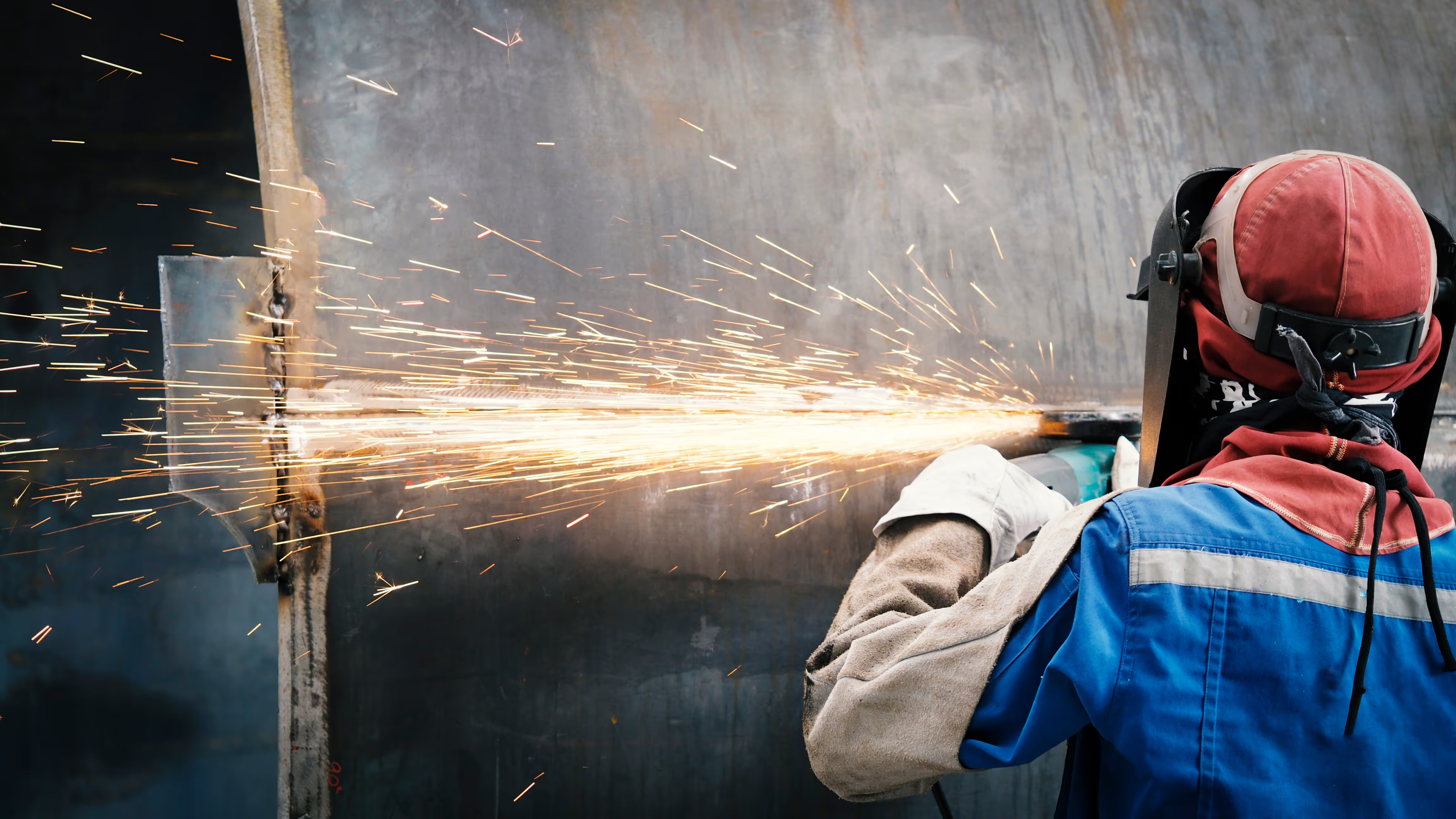
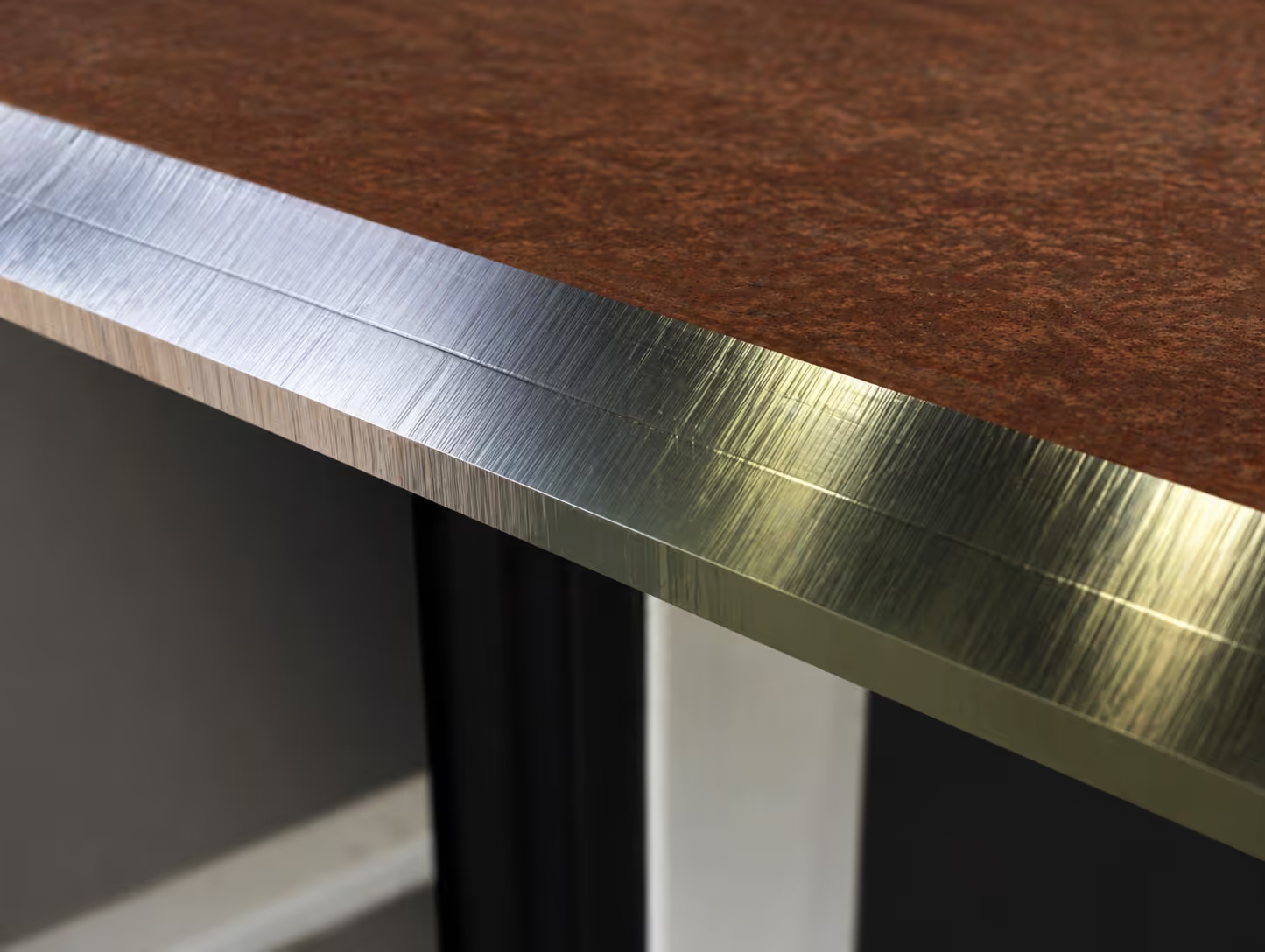
Machined beveling ensures clean surfaces, precise geometry and repeatability, supporting weld performance over long service life.

Wind turbine components are produced in series. Machined preparation ensures identical bevel geometry across all sections, regardless of operator or shift.
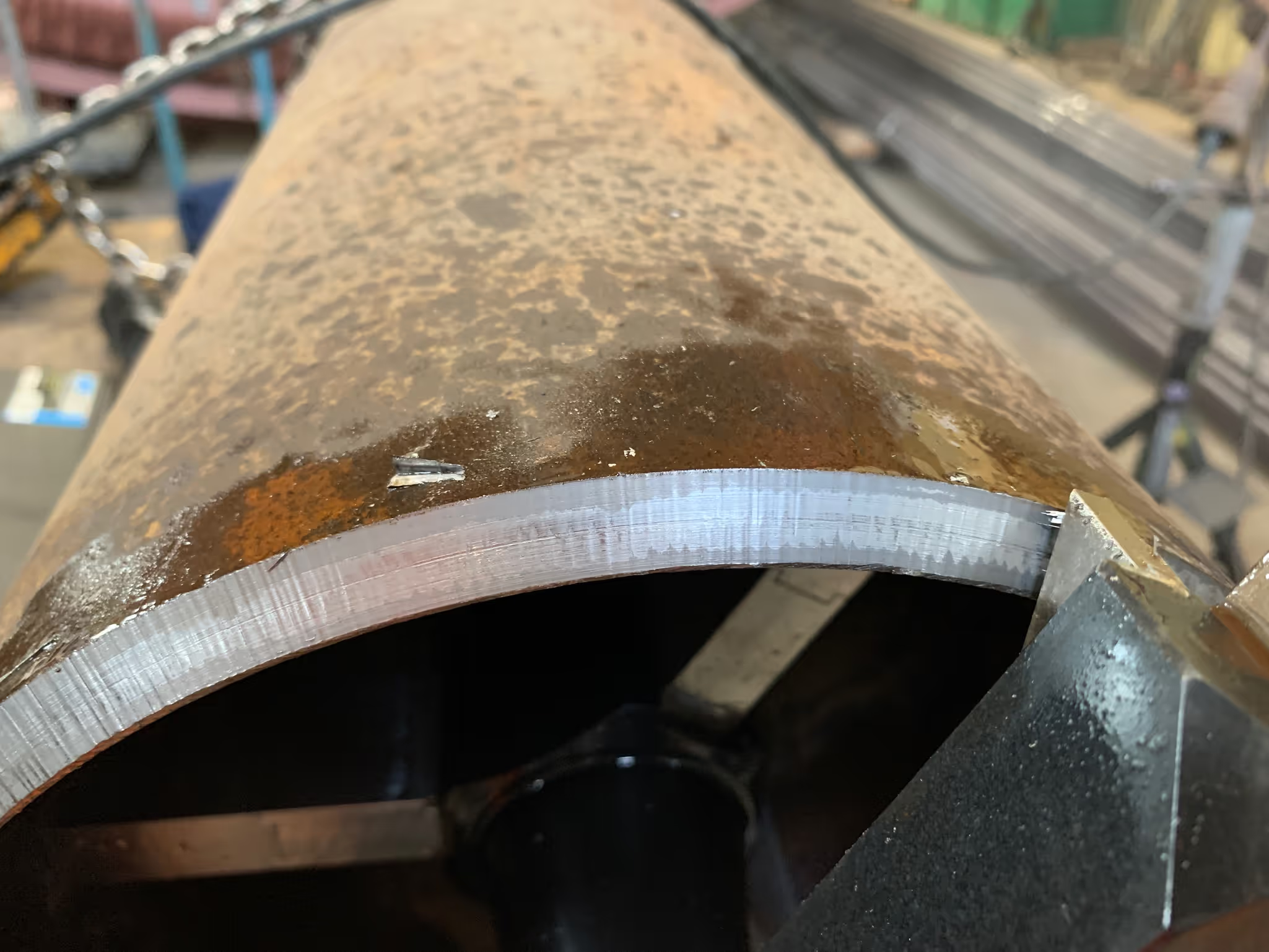
Clean, precisely machined surfaces improve weld integrity.
This directly contributes to long-term resistance to fatigue-related failure.
With 100% inspection standard, every detected defect leads to costly rework.
Precise preparation significantly improves first-pass acceptance rates.
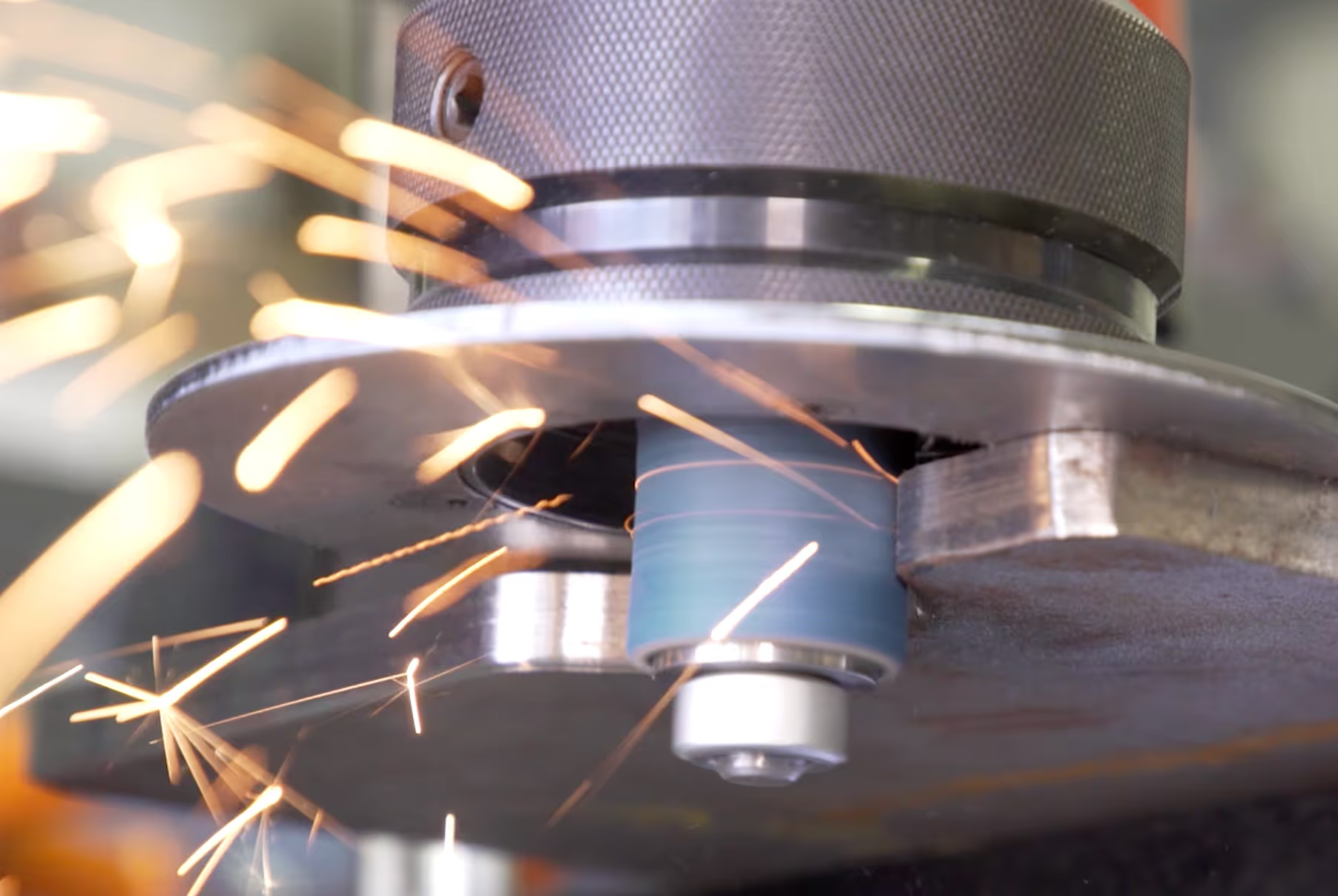
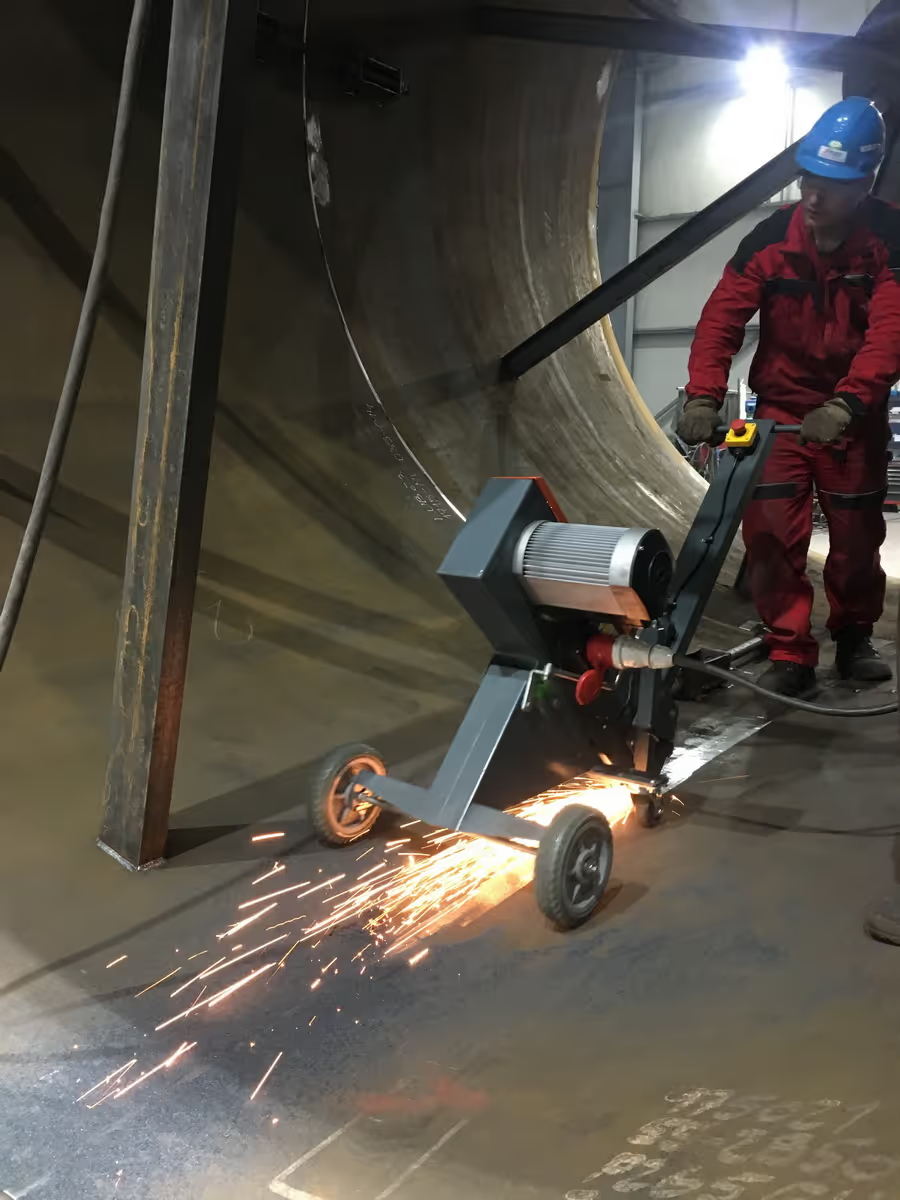
Flanges are critical structural nodes connecting tower sections.
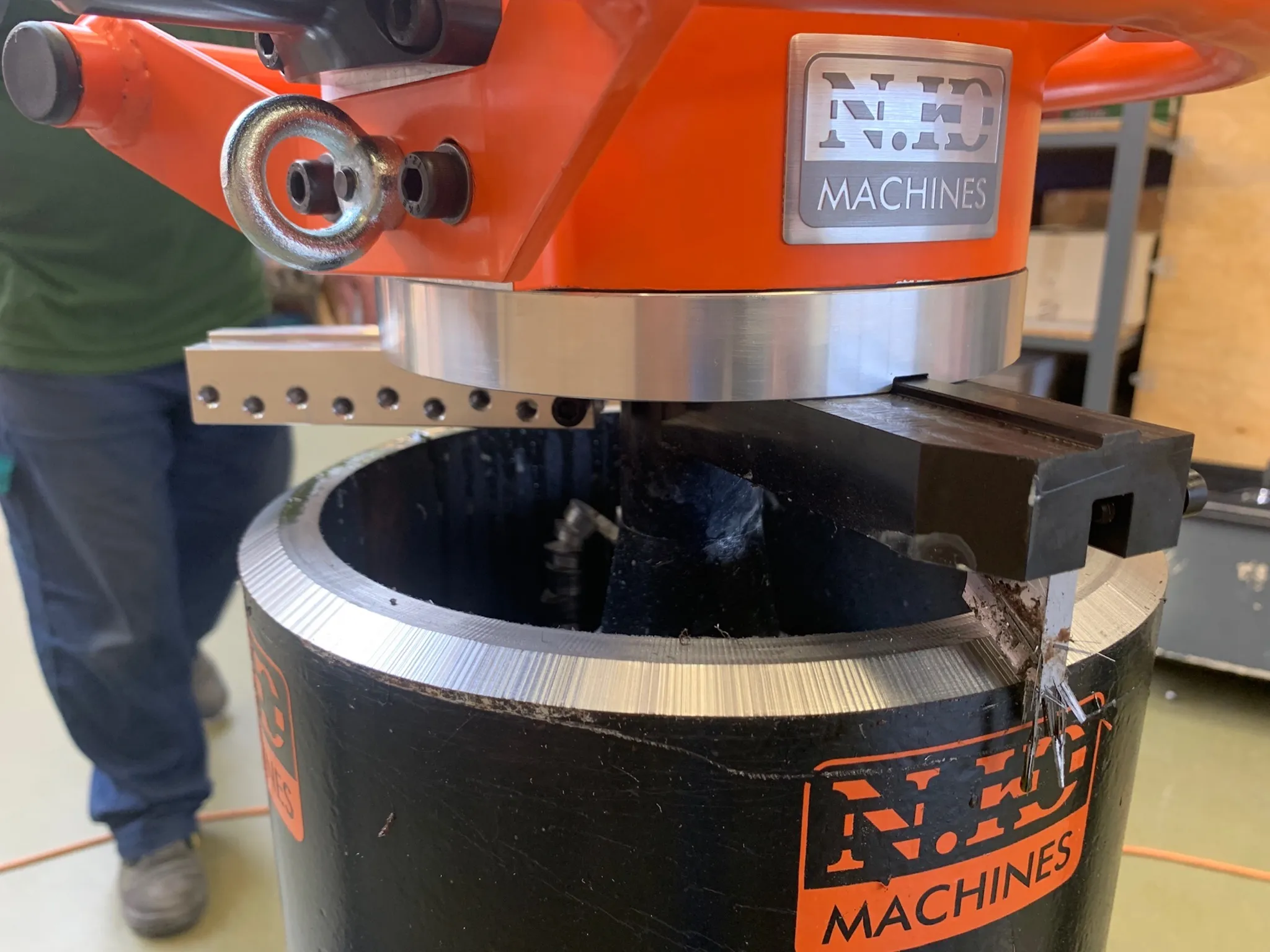
They require uniform bevel geometry across the entire circumference, which machining delivers reliably.
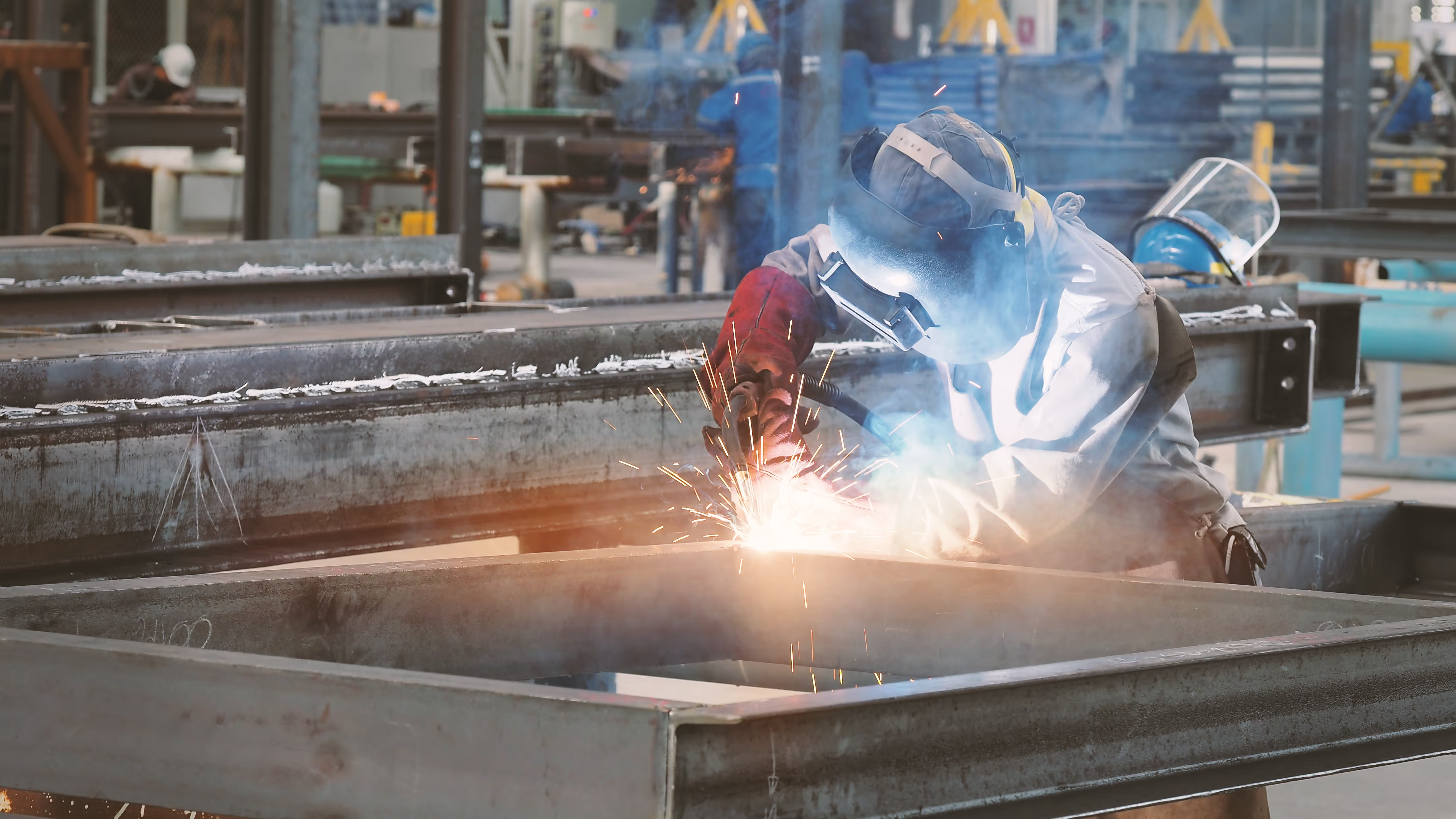
Large-scale production uses automated welding systems for longitudinal and circumferential seams.
Consistent bevel preparation is essential for stable and efficient operation.

Certification bodies such as TÜV or DNV require documented, repeatable processes.
Machined beveling supports compliance and simplifies audits.
All operate under the same pressure: high volume, strict deadlines and long-term reliability requirements.
Wind turbines are designed for 20 years or more of continuous operation.
A defect in a welded joint can lead to costly repairs, downtime or reduced structural integrity.
Beveling machines help ensure consistent weld preparation from the start, supporting long-term performance and reducing lifecycle costs.